





















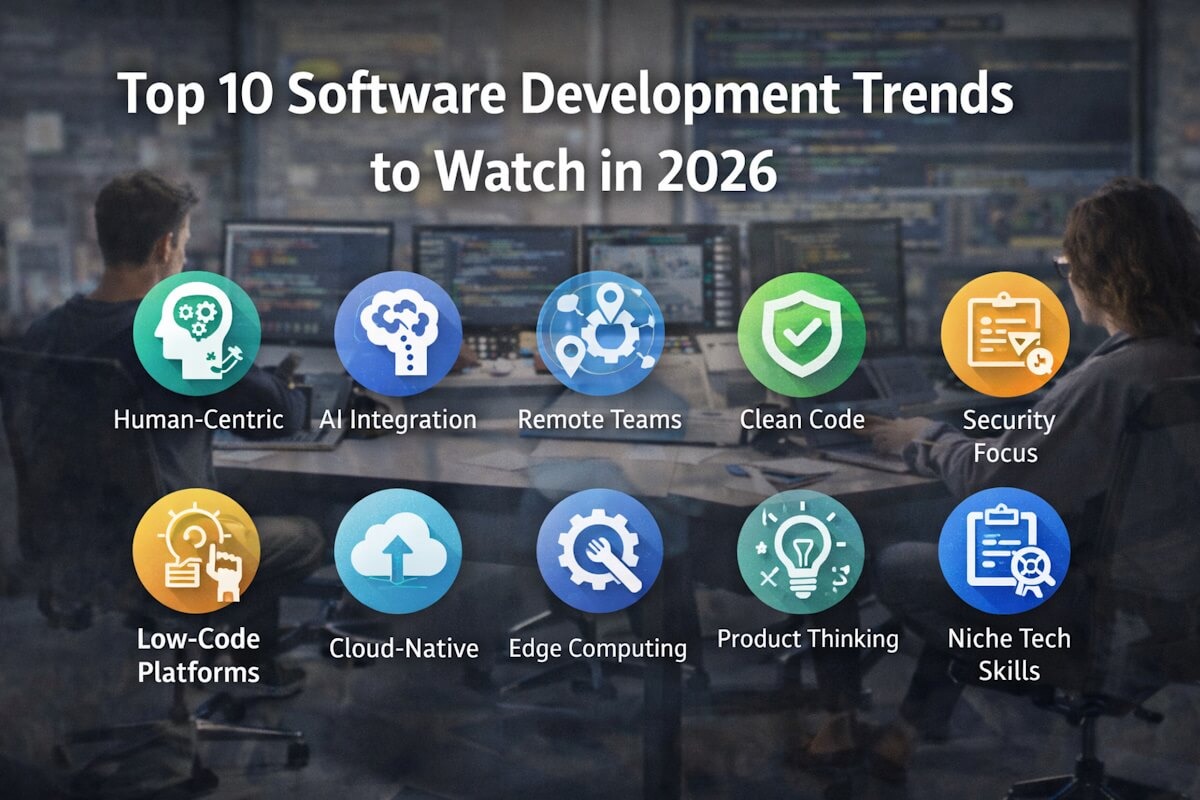
The tech world doesn’t sit still for long. What was big in 2024 might be outdated by the time 2026 hits. If you’re in the software game—whether you’re a product manager, CTO, developer, or just someone curious about what’s coming next—you’ll want to keep an eye on these rising trends.
Let’s walk through the ones that actually matter.
1. Human-Centric Software Is Taking the Lead
Functionality used to be everything. Now, it’s not just about what software does—it’s how it feels to use it. Companies are shifting focus from just performance to user satisfaction. This doesn’t mean adding more features. It means making them simpler, smarter, and more helpful.
Expect tools that feel more natural, that understand user habits better, and don’t require manuals to figure out. If it takes a guide to get started, people are skipping it.
2. AI Integration… Without the Fluff
Yeah, we said no jargon, and we meant it. There’s a difference between real AI integration and tossing in a chatbot to look cool. In 2026, more companies are getting smarter about where AI fits—and where it doesn’t.
Instead of flashy AI experiments, think automated bug detection, code optimization, and smart suggestions built into your IDE. Stuff that actually helps, not just buzzwords.
Curious about the debate? Check out this detailed look at software developers vs ai to see how both are shaping the future.
3. Remote Dev Teams Are Now the Norm, Not the Exception
This one’s not surprising, but it’s still huge. Remote work isn’t a trend anymore. It’s the default. Companies are building out distributed teams from day one. And they’re not just hiring freelancers—they’re bringing in full-time pros from all over the globe.
To do this right, a lot of firms turn to experienced teams or look to hire IT Consultants who already know how to operate across time zones and tech stacks.
And if you’re still treating remote like a temporary setup, you’re falling behind.
4. Clean Code and Maintenance Are Cool Again
Nobody brags about fixing legacy code. But in 2026, maintenance isn’t being ignored anymore. Teams are spending more time rewriting, refactoring, and documenting. Why? Because bugs are expensive. Bad code slows everything down.
There’s also a growing shift toward writing clean code from the start, following basic principles that often get skipped in a rush to launch. The idea is simple: write less, write smart.
Want a proper overview of how to structure projects better from the beginning? This software development guide breaks it down step by step.
5. Security Isn’t Just for the Security Team
Cybersecurity is everyone’s problem now. Developers are expected to think about security at every step—code, APIs, deployment, and even testing. No more passing the buck.
There’s also more training happening inside dev teams. Secure coding practices are part of onboarding. DevSecOps is growing fast, not as a buzzword, but as a real approach that’s baked into delivery pipelines.
Software without solid security won’t cut it in 2026.
Also read: Innovate Cost-Effectively Offshore Mobile App Development Unleashed
6. Low-Code Tools Are Being Taken Seriously
At one point, low-code was mostly for prototyping. Now, it’s powering actual products. Companies are using platforms that let non-developers build internal tools, dashboards, and workflows without needing to write code from scratch.
Does that mean developers are getting replaced? Nope. It just means more routine tasks can be handled without waiting weeks for dev time. Developers still own the complex stuff. Low-code helps clear their plates.
7. Cloud-Native Isn’t Optional Anymore
It used to be a choice—on-prem or cloud. In 2026, cloud-native is the baseline. Apps are being built directly for cloud platforms like AWS, Azure, or Google Cloud, instead of being migrated later.
This shift affects everything: how apps are designed, how they scale, and how they’re updated. Kubernetes, containerization, CI/CD—they’re baked into the process from day one.
And yeah, it’s more complex. But it’s also the way forward.
8. Edge Computing Is Quietly Growing
You won’t see this talked about as much, but it’s creeping into real-world software. Especially in industries like healthcare, retail, and logistics, where devices need to process data locally to save time.
Think wearables, sensors, and machines that analyze info on the spot instead of sending it to the cloud first. Developers building software for these environments have to think about latency, storage, and processing differently.
It’s not flashy, but it’s getting big.
9. Developers Are Becoming Product Thinkers
In the past, developers focused only on code. Product managers handled user needs. That gap is shrinking. More devs are learning about business goals, user journeys, and customer feedback.
Why? Because it helps them build smarter.
When devs understand what problem they’re solving—not just how to solve it—the software gets better. Faster.
This shift is helping teams ship features that actually matter, instead of just checking boxes.
10. Tech Hiring Is Getting Hyper-Specific
Generalists still have a place. But in 2026, hiring is getting a lot more focused. Companies want developers who know a specific stack, a niche framework, or even an industry.
If you’re running a team, this means you can’t just post a “Full Stack Developer” role and hope for the best. You’ll either need to invest in training—or Hire IT Consultants with specialized knowledge from day one.
So, What Should You Actually Do About All This?
Trends are great, but only if you use them to make smarter decisions.
You don’t need to follow every single one. But you should be asking:
- Is your team set up for remote collaboration?
- Are you building with security and maintenance in mind?
- Can non-devs support operations with low-code tools?
- Are you using the right cloud-native practices?
- Do your developers understand the “why” behind what they’re building?
It’s a good time to pause, check your direction, and maybe switch gears. You don’t need to overhaul everything. But ignoring these trends completely? That’s not an option anymore.
Need help finding your footing? Start with this solid software development guide. It’s not just fluff—it actually walks you through practical steps to build better software.


